

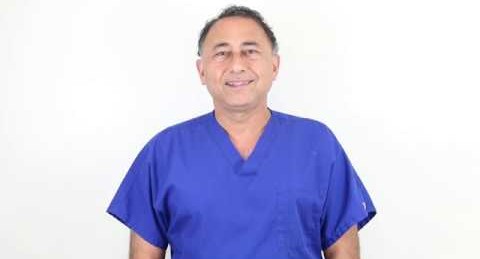
The first pair of readers feels harmless. Then there is a pair in the car, one by the bed, one in every bag. Dr. Khanna uses a comparison in this video that many people find clarifying: with conditions like diabetes or high blood pressure, daily tablets or injections manage the problem rather than change it. Glasses and contacts do the same for presbyopia.
"We can treat with glasses or contact lens." Dr. Rajesh Khanna, on presbyopia
What is presbyopia, and when does it start?
It is the loss of near focus that starts after 40, Dr. Khanna explains. It gradually gets worse year by year, and around 45 to 50 is when problems really begin and people first need reading glasses.
How is PIE different from glasses?
Glasses manage presbyopia every day. PIE replaces the contents of the natural lens with an artificial implant made of acrylic or silicone, which Dr. Khanna says is meant to stay for life. It is a refractive lens content exchange for people over 45. See our PIE (presbyopic implant in eye) page.
What does binocular vision mean here?
When both eyes are done, Dr. Khanna says binocularity is maintained, with each eye seeing distance, middle and near. That differs from approaches where one eye is set for distance and the other for reading.
Is it right for everyone over 45?
No. Your eye health and goals decide that at a full exam. Some people are happy with glasses, and that is a valid choice too.
Why does the diabetes comparison help?
Because it reframes the choice. Many people never questioned their reading glasses because they seemed like the only answer. Dr. Khanna's comparison shows that glasses and contacts are a daily way of managing presbyopia, much like tablets for blood pressure. Some people are happy with that routine. Others want a different approach, and PIE is one to consider after 45. The point is that you have a choice, and an exam helps you make it with real information.
Can you start without a long drive?
Yes. You can begin with a video consultation from home, and the process takes only a few visits. We have two offices. Call Beverly Hills at (310) 482-1240 (9100 Wilshire Blvd, Suite 265E, Beverly Hills, CA 90212) or Westlake Village at (805) 230-2126 (31824 Village Center Rd, Suite F, Westlake Village, CA 91361). We accept PPO plans only. We do not accept HMO plans or Medi-Cal.
Frequently asked questions
When does presbyopia start?
Dr. Khanna says presbyopia begins after 40, with problems commonly starting around 45 to 50.
What is the PIE implant made of?
Dr. Khanna says the artificial implant is made of acrylic or silicone and replaces the contents of the natural lens.
Rajesh Khanna, MD is a board certified ophthalmologist and UCLA clinical instructor, Jules Stein Eye Institute, with 25+ years in practice and 25,000+ procedures.